

NHS Estates Safety Fund: what it pays for, and how to deliver it in hospitals that never close
Most of the work that keeps a hospital safe is invisible to patients. A roof that stops leaking over a ward. A distribution board that no longer trips. A fire compartment that holds. An air handling unit that keeps a theatre within temperature on the hottest day of the year. Nobody writes to the local paper about these things, which is partly why they have been easy to defer.
The NHS Estates Safety Fund exists to stop deferring them. In September 2026 the Department of Health and Social Care published the first tranche of schemes funded from a £6.75 billion, nine-year pot, and trusts now have named projects and money to deliver against. This guide explains what the fund pays for, how the money reaches trusts, and how estates teams can turn an allocation into finished work inside buildings that stay open throughout.
What is the NHS Estates Safety Fund?
The NHS Estates Safety Fund is ring-fenced capital for tackling critical infrastructure risk in NHS hospital buildings in England. It is worth £750 million a year over nine years, £6.75 billion in total, and it sits within the government's long-term capital settlement for health.
It is deliberately practical. The published scheme lists are made up of works such as:
- Fixing leaking roofs
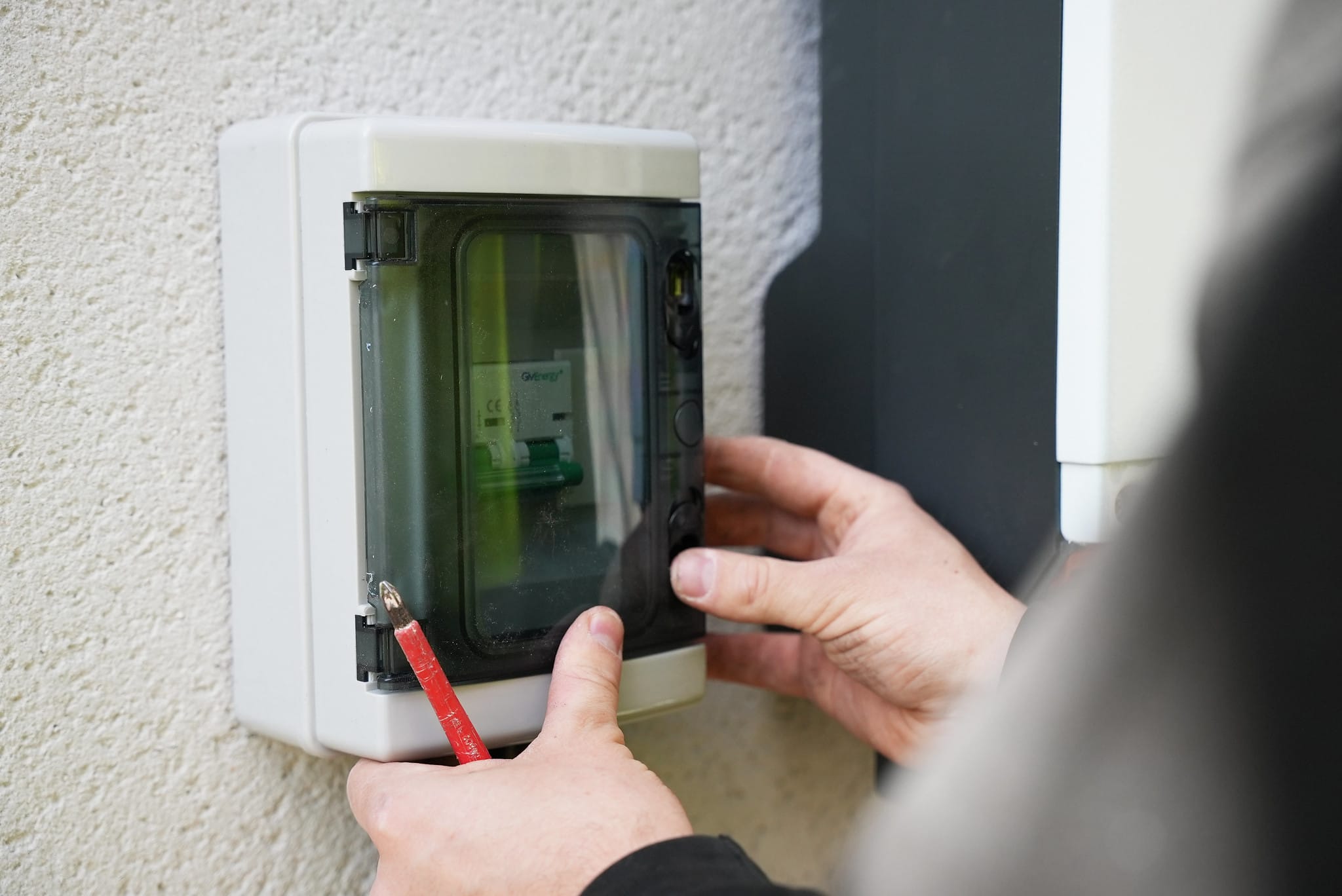
- Upgrading faulty electrical wiring and infrastructure
- Meeting fire safety requirements
- Replacing air handling units, and improving cooling and ventilation
- Locally identified trust priorities that reduce risk to patients, staff and services
It is not a new-build programme and it is not a decarbonisation fund. It is money to make existing hospital buildings safer and more resilient, which is why it matters so much to estates teams who spend their days managing the gap between what a building needs and what the budget allows.
What was published in September 2026
On 9 September 2026 the government announced more than £1.5 billion of schemes from the fund. Around £1.3 billion goes to maintenance, safety and resilience projects across the NHS estate, and more than £200 million to ten larger schemes such as replacement theatres, pathology facilities and a children's ward. On 11 September DHSC published the scheme-by-scheme allocations, updated on 16 September to correct the maternity and neonatal figures.
Two themes stand out in the list:
- Heat resilience. More than £32 million is going to cooling, ventilation and overheating projects, from theatre cooling to replacing a chiller that serves a PET scanner. Hospitals have always planned for winter. The fund signals that summer now needs the same planning.
- Maternity and neonatal care. More than £125 million is going to maternity and neonatal schemes, the areas where estate failures are least tolerable.
DHSC says the allocations will be updated as further schemes are approved, so the list is a starting point rather than a final word.
How the money reaches trusts
This is the part that is easy to misread. There is no national bidding round for the Estates Safety Fund. NHS England's capital guidance for 2026/27 to 2029/30, published in November 2025 and still the current guidance as at September 2026, sets out the mechanism:
- Allocations go to NHS regions first, based on each region's reported level of critical infrastructure risk and estates-related incidents. Regions then build the programme of schemes with their trusts.
- Regions get four years of firm allocations and a further five years of planning assumptions, and are expected to build a balanced portfolio of larger strategic schemes and smaller, targeted fixes.
- The fund is additional to, not a substitute for, operational capital. Trusts are still expected to spend their own operational capital on critical infrastructure risk at historic levels. Operational capital itself is now allocated 85% on depreciation and 15% on critical infrastructure risk.
- Delivery is monitored. Systems and providers report monthly on delivery and benefits against approved schemes, and NHS England can withhold future funding where plans are not followed.
Put simply, your estate data decides your share. If critical infrastructure risk is under-reported, out of date or poorly evidenced in ERIC and your asset records, the region cannot see it, and money flows to where the risk is visible.
The scale of the problem the fund is chasing
The latest published Estates Returns Information Collection (ERIC 2024/25, October 2025) put the cost of clearing the NHS maintenance backlog in England at £15.9 billion, up 15.7% in a year. The high-risk element, the portion where failure could cause serious harm or catastrophic service disruption, stood at £3.5 billion, up 28%.
Against that, £750 million a year is meaningful but finite. It will not clear the backlog on its own. What it can do is take the sharpest risks off the table, provided the right schemes are chosen and delivered on time. The next ERIC release, for 2025/26, is due on 15 October 2026 and will show whether the high-risk figure is still climbing.
Delivering safety works in a building that never closes
Here is the challenge that no allocation letter solves. The buildings with the worst critical infrastructure risk are usually busy ones: wards, theatres, maternity units and plant rooms that serve them. A roof cannot be replaced over an empty ward if there is no empty ward. An electrical upgrade cannot switch off a theatre block for a fortnight.
So the difference between a funded scheme and a finished one is almost always in the planning:
Survey before you specify. Intrusive surveys, electrical testing and fire-stopping inspections find what the desktop records miss. Discovering asbestos, hidden voids or a failing sub-main halfway through a job is the most common reason safety schemes overrun.
Plan continuity of service from day one. Decide early whether the work needs decant space, temporary plant, out-of-hours working or phased sequencing, and agree it with clinical colleagues before the programme is fixed. Temporary chillers, generators and ventilation often have longer lead times than the permanent kit.
Treat infection prevention and fire safety as design inputs. Dust control, negative-pressure enclosures, maintaining fire compartmentation during works and keeping escape routes clear are not site-rules afterthoughts. In a live hospital they shape the method.
Bundle where the building is already open. If a ceiling is coming down for rewiring, check the fire stopping above it. If a roof is being replaced, look at the plant on it. Doing related work in one visit saves money and saves the ward a second disruption.
Build for in-year delivery. Capital that is not spent in year is hard to protect. Schemes that are surveyed, designed and procured before the money lands are the ones that deliver. When the 2025/26 scheme list was revised, changes in deliverability were one of the reasons given, which is a useful reminder that readiness matters as much as need.
This is a shared job. The trust knows its clinical risks and operational pinch points. A capable works partner brings survey discipline, phasing experience and the ability to keep a site safe and running while the work happens. Schemes go best when both are in the room from the first survey, not when a finished specification is handed over the fence.
What estates teams can do now
- Check your critical infrastructure risk data. Make sure ERIC returns and asset records (including SHAPE) reflect your real high-risk backlog, with current survey evidence behind it.
- Get your asset management plan validated. NHS England expects each site to have an up-to-date development plan with a validated asset management plan by the end of 2026.
- Build a ready-to-go pipeline. Rank safety schemes by risk and deliverability, and get surveys and outline designs done before funding is confirmed.
- Plan heat resilience now. Cooling and ventilation schemes need design and procurement before the summer, not during it.
- Map continuity of service for every scheme. Decant, temporary plant and phasing should be costed in the scheme, not discovered on site.
- Line up delivery partners early. Frameworks and contractors with healthcare experience book up quickly once allocations are confirmed.
Where CLC fits
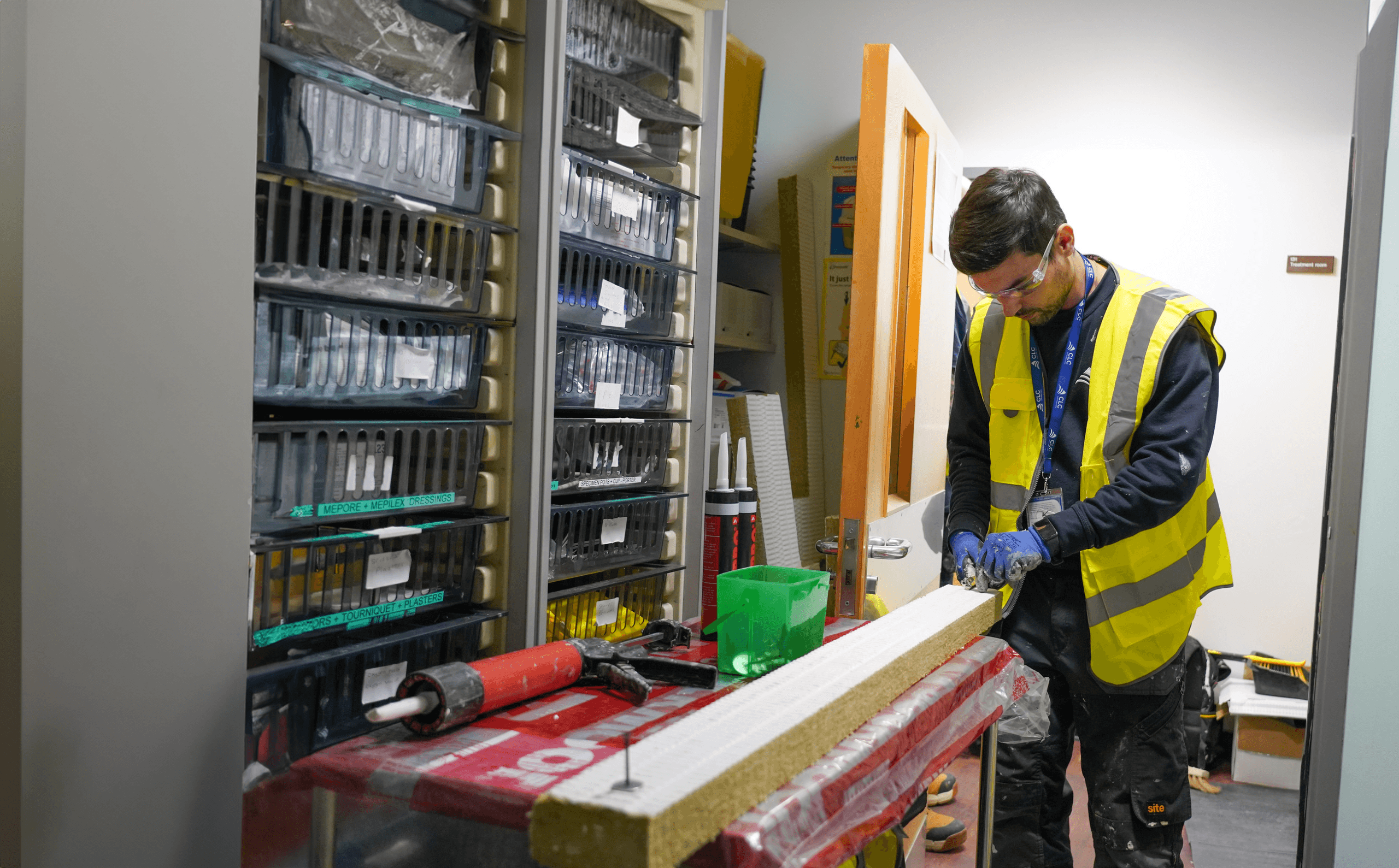
This is the kind of work CLC delivers across the public sector: capital works, refurbishment, fire safety and wider compliance on occupied buildings, planned around the people who use them. For hospitals, that means surveys that find the problems early, phasing that keeps clinical services running, and fire and electrical works planned so that wards stay in use wherever possible.
Next step: if you are turning an NHS Estates Safety Fund allocation into a delivery plan, book a call with a CLC business development colleague to talk through surveys, phasing and programme, or read more about our capital works and fire safety services for the public sector.
For the separate question of decarbonising the NHS estate, see our guide to the NHS Net Zero Building Standard.
Sources:
- DHSC, Estates Safety Fund: initial schemes and associated funding allocations, 2026 to 2030 (published 11 September 2026, updated 16 September 2026): https://www.gov.uk/government/publications/estates-safety-fund-initial-schemes-and-associated-funding-allocations-2026-to-2030
- GOV.UK, Over £1.5 billion to help NHS withstand year-round pressure (9 September 2026): https://www.gov.uk/government/news/over-15-billion-to-help-nhs-withstand-year-round-pressure
- NHS England, Capital guidance 2026/27 to 2029/30 (November 2025; current as at September 2026): https://www.england.nhs.uk/long-read/capital-guidance-2026-27-to-2029-30/
- DHSC, Estates Safety Fund: 2025 to 2026 (first published 30 May 2025, updated 24 September 2025): https://www.gov.uk/government/publications/estates-safety-fund-2025-to-2026
- NHS Confederation on ERIC 2024/25 backlog figures (16 October 2025): https://www.nhsconfed.org/news/nhs-estate-maintenance-bill-rising-nearly-ps16bn-deeply-worrying-health-leaders-warn
- GOV.UK statistics announcement, ERIC 2025/26 (release confirmed for 15 October 2026): https://www.gov.uk/government/statistics/announcements/estates-returns-information-collection-summary-page-and-dataset-for-eric-202526